Blog
How to Build Investor-Ready SaaS: From Architecture to Retention to Compliance
Alex Dimov
•
Dec 18, 2025, 10:00 AM

Investors evaluating SaaS products nowadays care about far more than a polished demo or a clean landing page. The bar has moved. With AI-native competitors entering every market and compliance expectations increasing across industries, investors expect early-stage products to demonstrate not only traction but technical maturity.
At Wecraft Media, we work with founders who want to build serious SaaS products. Many arrive with a clear vision but no framework for what “investor-ready” actually means. This article breaks that down into practical steps: architecture, scalability, retention, compliance, and the roadmap that connects them.
If you are preparing for pre-seed, seed, or Series A, this is your guide.
1. What Investors Expect in 2026 (and Why the Bar Has Risen)
Investor conversations in the past focused heavily on market size and product idea. Today, there is a new lens:
Does the product have data architecture that can support AI features later?
Will the platform scale without a rewrite?
Are security and compliance risks under control?
Is retention improving?
Does the team have a predictable delivery model?
The shift is happening because SaaS categories are crowded. Two products with similar features can look identical from the outside. Strong architecture, clean onboarding, and predictable performance signal that the startup can scale without burning capital.
This does not mean building an enterprise-grade system from day one. It means building the right foundations.
2. The Core of Being Investor-Ready: Your Architecture
2.1 Architecture Should Follow the Product Strategy
A mistake we often see from founders: the system grows feature by feature until it becomes impossible to maintain. Investors notice this. Technical due diligence today includes:
API and modularity review
Data model scalability
DevOps maturity
AI-readiness
Logging and observability
A founder does not need to speak the language of engineers. But a founder does need to know whether the system can survive growth.
2.2 The Three Architectural Layers Investors Care About
1. Application Layer
This includes the code structure, modularization, and maintainability. Red flags include:
“God classes” or massive services that do everything
No separation between business logic and infrastructure
Hard-coded configurations
A healthy application layer means new features can be built quickly and safely.
2. Data Layer
This is increasingly where the competitive advantage lies.
For an investor, the key questions are:
Can the system support analytics and AI later?
Is data stored in a way that allows insights and automation?
Is the schema stable and documented?
3 AI-Ready Does Not Mean AI-Built
Some founders try to integrate AI too early.
Being AI-ready simply means:
clean, structured data
events that can be tracked and labeled
a storage solution able to support vector search or streaming later
permission and compliance rules clear from the beginning
When we build MVPs with clients, we design these foundations even when AI is not part of v1.
3. Retention: The Metric Investors Now Prioritize
3.1 Why Retention Has Become the New Growth
In SaaS, high churn destroys valuation. Investors prefer a product with slower acquisition but strong retention over a fast-growing product that loses users monthly.
The key metric:
NRR – Net Revenue Retention
NRR above 100 percent signals that users are not only staying but expanding their usage. Top SaaS companies operate around 120 percent or higher.
3.2 What Drives Retention in Early-Stage SaaS
1. Onboarding that produces a “first win”
Onboarding must guide users to value quickly. Most MVPs fail here. Over-engineering features while neglecting onboarding is a common founder trap.
2. Clear product workflows
Users should immediately understand:
➡️ what the product does
➡️ what steps they should take
➡️ how they benefit
3. Usage visibility
Dashboards, progress indicators, and notifications reinforce engagement. They help users see actual value.
4. Continuous product improvement with predictable releases
Investors love teams that can deliver reliably. Predictable releases indicate strong engineering discipline.
At Wecraft, many founders hire us to not only build features but build the system that releases features without breaking everything else.
4. Compliance: The Hidden Deal-Breaker Founders Underestimate
Compliance has become a top concern for investors, especially in:
🏥 health
💵 finance
🔋 energy
✈️ mobility
✨ AI-driven products
Regulations like GDPR, HIPAA, SOC 2, and emerging AI legislation shape how products must operate. Ignoring compliance early creates technical debt that can cost tens of thousands to fix later.
4.1 The Compliance Checklist for Early-Stage SaaS
1. Data ownership and user consent
Every system should answer:
What data do we store?
Why do we store it?
How do users give consent?
How do they revoke it?
2. Data minimization
Store only what is needed. This reduces risk.
3. Access and roles
RBAC (role-based access control) is a must for any B2B SaaS.
4. Audit logs
Who accessed what and when. Investors absolutely check this.
5. Backups and disaster recovery
A startup cannot afford extended downtime.
4.2 AI Compliance Is Coming Fast
If your product uses AI, investors will ask:
Are prompts or user inputs stored?
Are personal data or sensitive fields used?
Can users request deletion of training data?
Building these systems early is far cheaper than retrofitting them later.
5. How to Build an Investor-Ready Roadmap
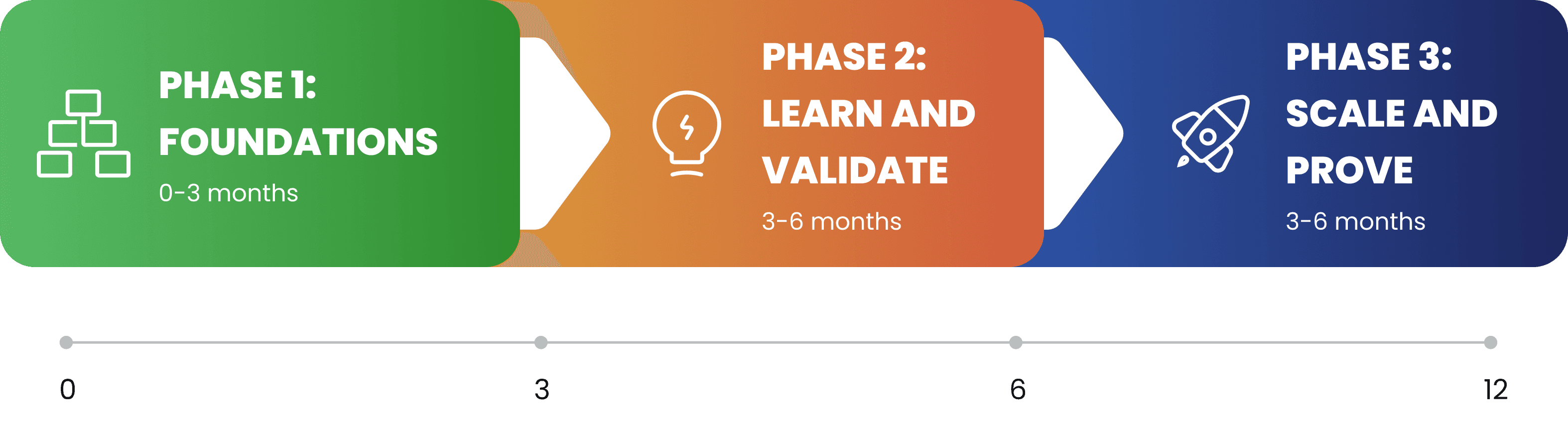
Below is a simple roadmap we use with founders during discovery workshops.
Phase 1: Foundations (0–3 months)
Scope the product around a clear value proposition
Map critical workflows
Create scalable architecture
Design the data model
Build an onboarding flow
Basic analytics and event tracking
First version of RBAC and audit logging
Phase 2: Learn and Validate (3–6 months)
Release core features in batches
Measure retention patterns
Improve onboarding based on data
Add usage dashboards
Strengthen security, logging, and documentation
Prepare for investor technical questions
Phase 3: Scale and Prove (6–12 months)
Introduce integrations that increase stickiness
Optimize performance
Add automation or basic AI workflows
Run reliability tests
Conduct light technical due diligence with an external team
Produce investor-ready architecture documentation
This roadmap shows investors that the founder is not just building a product but building a business.
6. Why Many Founders Struggle With This (and How to Fix It)
Most founders are not technical — and that is not a disadvantage. The real issue is working with development teams that:
overcomplicate early architecture
or build quick fixes that collapse later
or ignore compliance entirely
or deliver slowly without predictable release cycles
A strong development partner should:
translate business strategy into technical strategy
build systems for scale, not for chaos
ensure compliance from day one
help founders understand trade-offs
deliver predictably on a roadmap
This is the core of our work at Wecraft Media.
Conclusion: Investor-Ready Is a Process, Not a Milestone
Being investor-ready means having:
the architecture to grow
the retention metrics that prove value
the compliance foundation that avoids risk
the roadmap that ties everything together
Startups that adopt this mindset raise faster and scale smoother.
If you want to build an investor-ready SaaS platform, we can support you with architecture, product strategy, and long-term development.